


Industrial Robots
The Industrial Robots Manufacturer!
Dongguan Chuanglida Intelligent Equipment Co., Ltd. is a high-tech enterprise specializing in industrial robot wholesale and customized automation robot integration solutions. Classified under General Equipment Manufacturing (C34), it stands as a technology-driven representative among SMEs in Dongguan.


Why choose us
less Time
The company attaches great importance to technology research and development, focusing on the stability, flexibility and intelligence of industrial robots. It can provide customized equipment and system integration solutions according to customer needs, such as flexible worktable for welding robots and modular adjustment device for industrial robots.
Quality control
Establish a whole-process quality inspection system from raw material procurement to finished product delivery. The raw material suppliers are all selected from high-quality enterprises in the industry (such as Berlant Robot Co., LTD.). The finished products need to pass multiple verification steps such as no-load test, load test and stability test before delivery.
Global Application Reach
We've collaborated with over 500 clients globally are exported to Southeast Asia, India, Pakistan, Turkey, Tunisia, Poland, Italy, Slovakia, Brazil, etc.
CNC machining Manufactruing process
Better quality control and consistency
Along with other tech — such as the industrial internet of things (IIoT), artificial intelligence, data analytics or 3D printing robots — industrial robots are able to provide better production quality and more precise and reliable processes. Added benefits also include reduced cycle times and real-time monitoring to improve preventive maintenance practices.
Maximum productivity and throughput
An industrial robot increases speed for manufacturing processes, in part by operating 24/7. Robots don't need breaks or shift changes. The speed and dependability of robots ultimately reduces cycle time and maximizes throughput. Robotic factory automation and manufacturing with robotics enables high efficiency.
Greater safety
Using robots for repetitive tasks means fewer risks of injury for workers, especially when manufacturing has to take place under hostile conditions. In addition, supervisors can oversee the process online or through remote monitoring from a remote location.
Reduced direct labor costs
The cost of having a person handle many manufacturing operations is often more expensive than a robot. This can also free up workers so their skills and expertise can be used in other business areas, such as engineering, programming and maintenance of the robotics used in manufacturing.
Applications of Industrial Robots
Product Assembly: Industrial robots are widely used as assembly machines in the automotive, electronics, consumer goods, and medical device industries. They excel at performing highly repetitive, precise assembly tasks—such as screwdriving, part placement, soldering, and press fitting—that are tedious and error-prone for manual labor. Typically, their end-of-arm tooling (EOAT) is equipped with mechanical or pneumatic grippers for rapid pick-and-place automation and accurate part orientation. Increasingly, robots in assembly lines now utilize advanced sensors and force feedback to recalibrate for micro-positioning, ensuring critical assembly tolerances are met.
Non-Conventional Machining: Modern non-conventional machining methods—such as waterjet cutting, robotic laser cutting, abrasive jet machining, electric discharge machining (EDM), and plasma cutting—enable manufacturers to shape, engrave, and process materials with extreme accuracy and minimal manual intervention. These non-contact automation processes use highly concentrated streams of water, laser beams, electrical currents, or plasma to erode, melt, or vaporize workpiece material without physical contact.
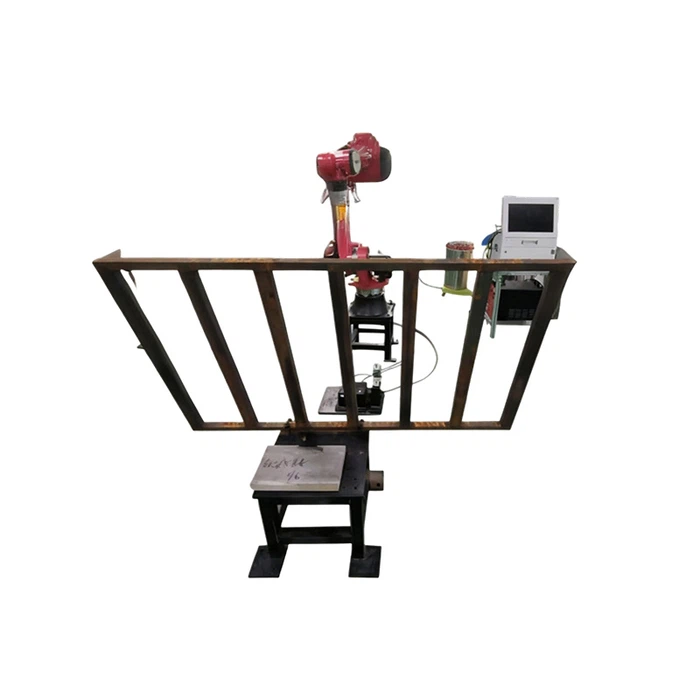
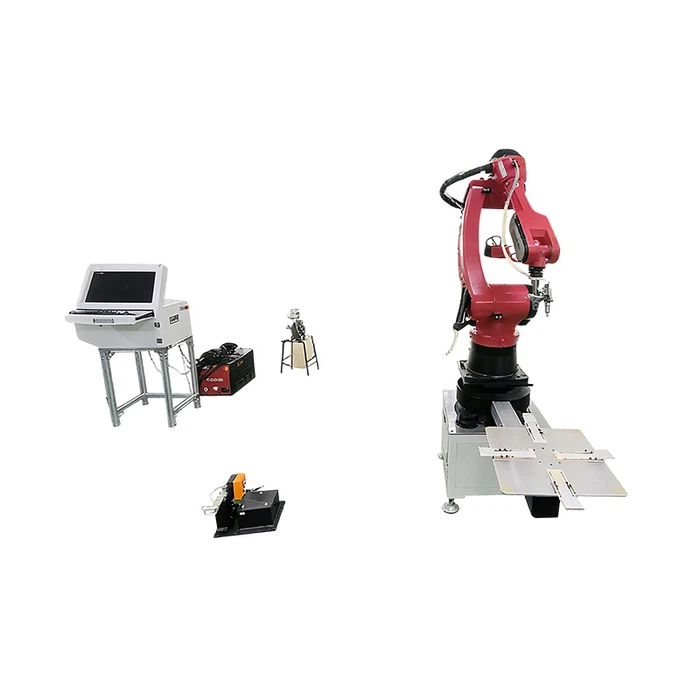
Welding: Robotic welding systems are essential for achieving consistent, high-quality welds in automotive manufacturing, heavy machinery, and metal fabrication facilities. Automation enables better control over critical welding parameters—including current, voltage, arc length, filler feed rate, weld rate, and travel speed—resulting in improved structural strength and visual finish. Robotic MIG, TIG, and spot welding solutions help manufacturers meet stringent quality standards, decrease rework, and improve workplace safety by minimizing human exposure to fumes and heat.
Painting and Coating: Precision robotic painting and automated coating are indispensable in industries such as automotive, aerospace, and consumer appliance manufacturing. Robots achieve uniform paint application and consistent coating thickness, reducing waste and producing a superior surface finish. Since industrial-grade paints, pigments, and solvents can be hazardous or flammable, automated paint robots ensure a safer working environment, lower VOC emissions, and improved compliance with regulatory standards.
Grinding, Polishing, and Buffing: Automated grinding, polishing, and buffing are common in metalworking, plastics, and woodworking industries to achieve desired surface finishes and dimensional accuracy. Robotic arms reliably perform repetitive, oscillating abrasive actions, delivering consistent pressure and movement that surpass human capabilities. This leads to superior product quality, decreased cycle times, and the ability to process complex geometries or fragile workpieces.
Essential Components of Industrial Robots
Controller: It provides the robot with the memory and processing power necessary for operation. The robot's controller acts as the brain of the whole control system.
Sensors: Robots use sensors to gather data from their surrounding environments. Sensors are the eyes and ears of the robot.
Drive and Power Source: A robot can use electrical, pneumatic, hydraulic, or any other drive to draw and convert the power required for its operation.
Robotic Arm: Designed to mimic a human arm, robotic arms are structures made of several segments connected by joints/linkages. The joints can be programmed to move in the desired direction.
End of the Arm Tooling (EOAT)/End Effectors: EOATs are customized equipment/actuators connected at the end of a robotic arm used to perform specific operations such as welding, material handling, painting, assembly, etc. Some industrial robots support the swapping of EOATs to let them perform different operations.
Machine Learning: ML Algorithms are now an essential part of industrial robots, transforming vast datasets into actionable intelligence, which allow robots to learn from experiences, hone their decision-making, and adjust to new tasks with improved efficiency. Therefore, modern robots can increasingly perform complex operations with or without human assistance.
Packing Details
We will packing by professional export packing,safety against breakage, finally into the wooden cases/ carton/pallet or customized package.

FAQ
We are one of the most professional industrial robots manufacturers and suppliers in China, specialized in providing high quality customized robots. We warmly welcome you to buy discount industrial robots in stock here from our factory. For price consultation, contact us.